
If you start looking into water filters, it doesn’t take long before things get confusing. One person swears by a jug in the fridge. Another insists reverse osmosis is the only safe option. Online stores show systems ranging from a few hundred rand to more than the price of a second-hand car.
The truth is simpler than the marketing makes it seem: most households don’t need extreme filtration, but almost everyone benefits from some form of it.
This guide breaks down the main water filter types used in South Africa — what they actually do, what they don’t, and who each one makes sense for.
Important Clarification of Water Filteration
No filter is “best” in isolation.
A filter is only good if:
- It addresses your water concerns
- It matches how your household uses water
- It doesn’t quietly drain your budget
With that in mind, let’s go through the main categories, starting with the simplest.
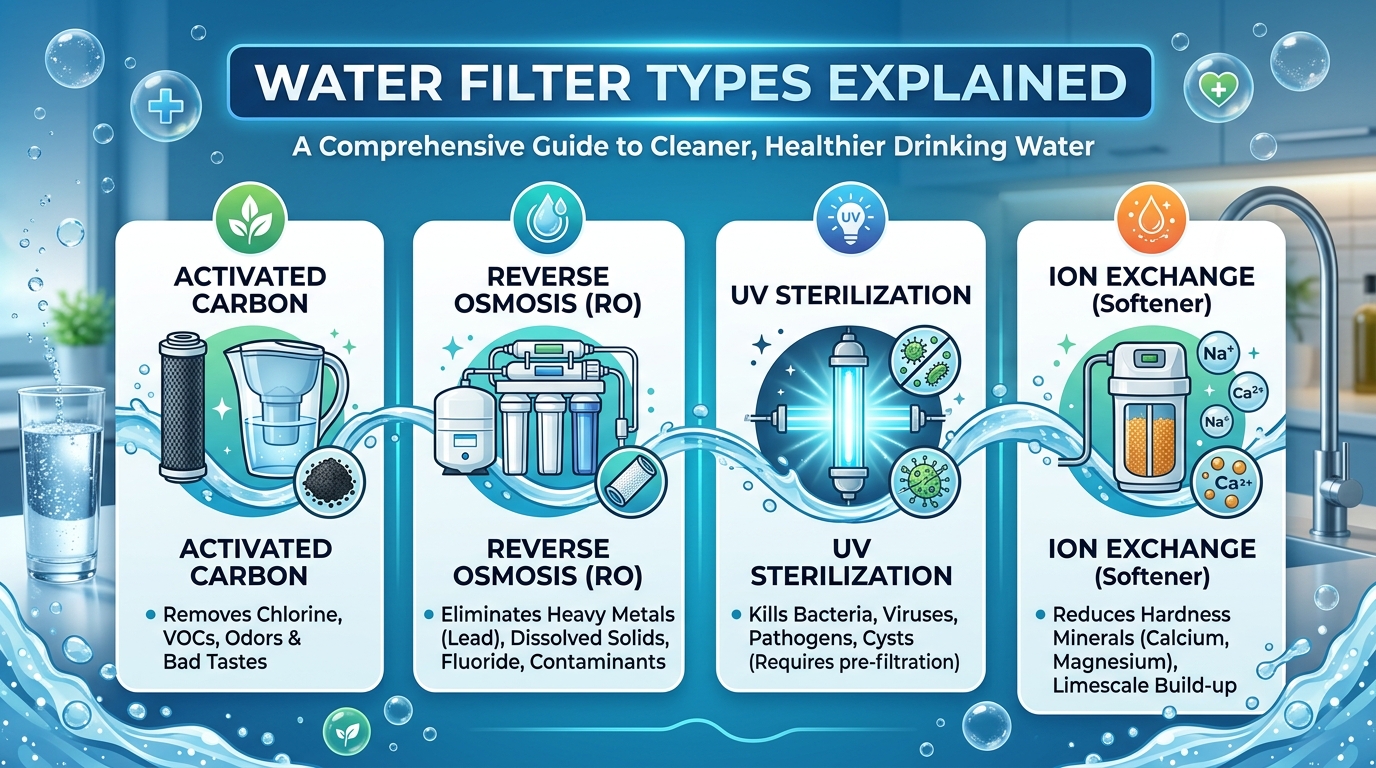
1. Water Filter Jugs (Entry-Level Filtration)
What They Are
Filter jugs are the familiar plastic jugs that sit in the fridge or on the counter. You pour tap water in, it passes through a cartridge, and collects below.
What They Typically Remove
- Chlorine
- Some sediment
- Some taste and odour compounds
What They Don’t Remove Well
- Bacteria (reliably)
- Heavy metals (unless specifically designed for it)
- Fluoride (usually not)
- Dissolved chemicals
Pros
- Very affordable
- No installation
- Easy to use
- Good taste improvement
Cons
- Small capacity
- Filters need frequent replacement
- Easy to forget maintenance
- Limited protection
Best For
- Single people or couples
- Low-risk households
- Improving taste rather than safety
Filter jugs are often people’s first step away from bottled water. They’re not a complete solution, but they’re better than nothing.
2. Countertop Water Filters
What They Are
These sit on your counter and usually connect to the tap when in use. They’re more robust than jugs and use larger filter cartridges.
What They Typically Remove
- Chlorine
- Sediment
- Some heavy metals (depending on filter)
- Taste and odour
What They Don’t Remove
- Most bacteria (unless designed specifically)
- Fluoride (in most cases)
- Everything dissolved in water
Pros
- Better filtration than jugs
- Larger capacity
- No permanent installation
- Easier to maintain
Cons
- Takes up counter space
- Slower flow
- Still limited against microbes
Best For
- Small families
- Renters
- People who want better filtration without plumbing work
For many households, this is the point where water starts to feel consistently “better” without major investment.
3. Under-Sink Water Filtration Systems (The Sweet Spot)
What They Are
Under-sink systems are installed below the kitchen sink and supply filtered water through a dedicated tap. These systems are extremely popular in South Africa for good reason.
What They Typically Remove
- Chlorine
- Sediment
- Many heavy metals
- Some chemicals
- Taste and odour
Some higher-end systems also reduce bacteria.
What They Don’t Remove (Usually)
- All dissolved salts
- Fluoride (unless specifically designed to)
Pros
- Consistent, convenient
- Good balance of cost and performance
- Higher flow rate
- Ideal for cooking and drinking
Cons
- Installation required
- Filter replacement costs
- Quality varies widely by brand
Best For
- Families
- Households with children
- People replacing bottled water
- Long-term homes
For most Cape Town households, an under-sink filter is the most practical long-term solution.
4. Reverse Osmosis (RO) Systems
What They Are
Reverse osmosis systems force water through a semi-permeable membrane, removing a very high percentage of contaminants.
What They Remove
- Bacteria
- Viruses
- Heavy metals
- Fluoride
- Nitrates
- Many dissolved chemicals
Downsides People Don’t Talk About Enough
- Expensive upfront
- Wastes water
- Slow filtration
- Removes beneficial minerals
- Requires maintenance and monitoring
Pros
- Extremely thorough
- Very consistent output
- Peace of mind for high-risk situations
Cons
- Overkill for most households
- Higher running costs
- Environmental waste concerns
Best For
- Immunocompromised individuals
- Very poor source water
- High nitrate or chemical contamination
- Borehole water with known issues
RO systems are powerful tools — but they are not automatically the “best” choice.
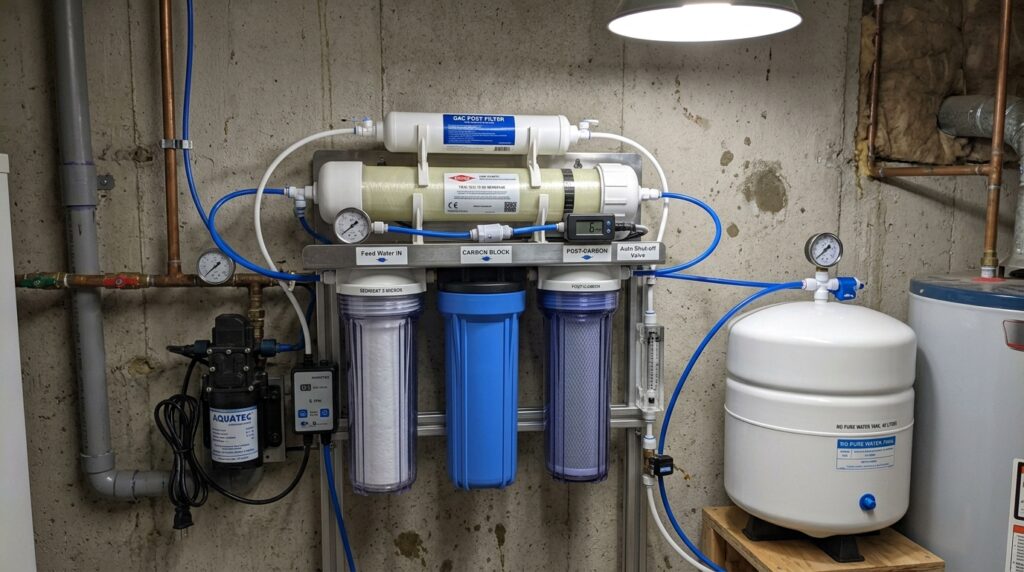
5. Whole-House Water Filters
What They Are
Whole-house systems filter water as it enters the home, affecting every tap, shower, and appliance.
What They Typically Do
- Reduce sediment
- Reduce chlorine
- Improve smell and comfort
- Protect appliances and pipes
What They Don’t Do Well
- Make water drinkable on their own
- Remove bacteria reliably
- Replace drinking-water filtration
Pros
- Better shower experience
- Less scale
- Cleaner appliances
- Low maintenance per tap
Cons
- High upfront cost
- Doesn’t replace drinking filtration
- Can give a false sense of safety
Best For
- Homes with skin sensitivity issues
- Borehole water users
- People pairing it with under-sink filters
Whole-house filters are comfort upgrades, not drinking-water solutions.
How These Water Filter Systems Compare in Real Life
Most households don’t use one system alone. They combine:
- Whole-house filter (comfort)
- Under-sink filter (drinking)
- Occasional boiling (backup)
This layered approach costs less than extreme systems and solves real problems without chasing perfection.
Filters vs Bottled Water: The Cost Reality
Bottled water feels cheap until it isn’t.
At R20+ for 5 litres, many families spend hundreds per month without noticing. A mid-range filter system often pays for itself in under a year — and continues saving money after that.
What to Look for When Choosing a Filter (Without Getting Technical)
Instead of focusing on buzzwords, ask:
- What contaminants am I trying to reduce?
- How much water does my family drink daily?
- How often will filters need replacement?
- Can I maintain this system realistically?
If a system is so complex that you stop maintaining it, it becomes useless.
Common Filter Myths About A Water Filter
- “More expensive means safer”
- “RO is the only real filtration”
- “Whole-house filters make water drinkable”
- “All filters remove fluoride”
Marketing thrives on confusion. Clarity saves money.
Final Thoughts: Choose the Right Tool, Not the Biggest One
Water filtration isn’t about winning an arms race against contaminants. It’s about matching the solution to the problem.
For most South African households:
- Some filtration is better than none
- Extreme systems are rarely necessary
- Consistency matters more than perfection
A well-chosen filter quietly improves daily life — without becoming another thing to worry about.
Continue Reading
- Home Water Safety Filtration Guide
- Is Showering in Tap Water Safe?
- Is Tap Water Safe to Drink in Cape Town?
- Does Boiling Water Make Water Safe?
- Is Borehole Water Safe to Drink?
- Water Myths That Cost Homeowners Money