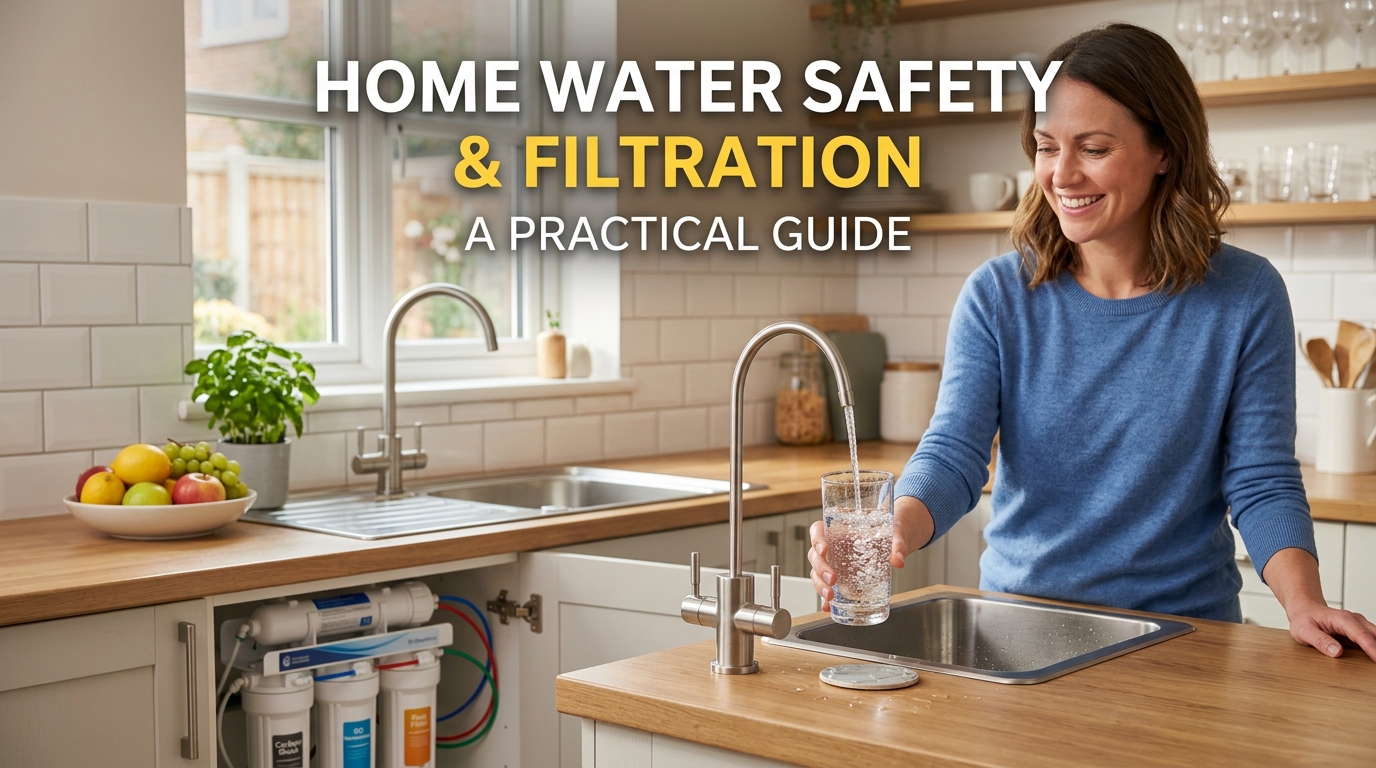
Water is one of those things most of us only think about when something goes wrong. A strange taste. A stomach bug that moves through the family. A notice from the municipality. Or a quiet but uncomfortable realisation that bottled water has become a permanent line item in the monthly budget. If you live in Cape Town, you already know that our water situation is… complicated. Compared to many countries, we’re lucky. Our tap water is treated, monitored, and generally considered safe. At the same time, many households boil water, buy bottled water, install filters, or do all three — often without being fully sure what problem they’re actually trying to solve. This guide exists to clear that up. It’s written for homeowners and families who want to make sensible, cost-effective decisions about water — not perfect ones, not fear-driven ones. Whether you rely on municipal water, borehole water, rainwater tanks, or a mix of everything, the goal is the same: safe water, reasonable costs, and fewer unknowns. You don’t need to read this all at once. Each section stands on its own, and links to deeper guides if you want to go further. Understanding Water Quality in South Africa South Africa’s urban water systems are better than many people realise — and also more fragile than most people admit. Municipal water in cities like Cape Town is treated at large plants, tested regularly, and released into the system according to national standards. On paper, this water is safe to drink. But water quality doesn’t end at the treatment plant. Between the plant and your tap: This is why two neighbours can have very different experiences with the same “water supply.” One drinks from the tap with no issue. The other boils everything after a bad bout of gastro. Neither is necessarily wrong. Is Cape Town Tap Water Safe to Drink? The honest answer is: usually, yes — but not always, and not equally for everyone. Cape Town’s tap water generally meets South African National Standards. However, past studies and municipal notices have shown that: For healthy adults, drinking straight from the tap is unlikely to cause problems most of the time. For children, elderly family members, or anyone with a compromised immune system, the margin for error is smaller. This is why many households are advised to boil water during certain periods, and why boiling twice is sometimes recommended when contamination is suspected. 👉 Watch this video for a deeper dive into what the tap water is really like in Cape Town What Are the Actual Health Risks in Household Water? Short-Term Risks Long-Term or Cumulative Concerns It’s important to separate probability from possibility. Most people will never experience serious illness from tap water. But when something does go wrong, it often affects multiple people in the household at once — which is why families tend to be more cautious than individuals. Drinking Water vs Household Water: A Critical Distinction One of the biggest mistakes people make is treating all water use as equal. You do not need drinking-quality water for: You do want higher-quality water for: Once you separate these uses mentally, everything else becomes easier — and cheaper. Borehole Water: Natural Doesn’t Mean Safe Borehole water is extremely popular in Cape Town, especially where municipal bills climb quickly. Sometimes borehole water is excellent. Other times, it isn’t. Common borehole issues include: The biggest danger with borehole water is assumption. People assume underground water is clean by default. Without testing, that assumption can be wrong. 👉 Deeper dive:Is Borehole Water Safe for my swimming pool? Rainwater & JoJo Tanks: Where They Shine (and Where They Don’t) Rainwater tanks are one of the smartest investments many South African households have made — but only when used correctly. Rainwater is excellent for: Rainwater is not ideal for drinking unless properly treated. Bird droppings, dust, roofing materials, and stagnant storage all introduce risk. Most households get the best value by using rainwater to reduce municipal consumption, not to replace drinking water entirely. 👉 More detail here:Rainwater & JoJo Tanks: What You Can (and Shouldn’t) Use Them For Water Filtration Options: A High-Level Overview There is no single “best” water filter. There is only the best filter for your situation. Broadly, filtration options fall into these categories: Price ranges vary wildly — from under R500 to well over R15,000. More expensive does not always mean more appropriate. 👉 Full comparison:Water Filter Types Explained Showering in Tap Water: Is It as Safe as We Assume? Most people never question shower water — and for most people, that’s fine. However: For people with eczema, asthma, or very sensitive skin, shower water quality can affect comfort more than drinking water quality. Shower filters won’t make unsafe water safe, but they can improve skin, hair, and smell for some users. 👉 Learn more:Is Showering in Tap Water Safe? The Cost of Water: Why Bottled Water Quietly Destroys Budgets At around R22 for 5 litres (as of 2025), bottled water feels cheap — until you do the maths. A family of five can easily spend: That’s a significant percentage of a R20,000 take-home salary, for something that doesn’t build long-term resilience. Not to mention an overwhelming portion of the population work on construction or work as a maid on minimal wage structures. While the data would suggest South Africans earn ‘ enough ‘ to survive, the uncomftable truth that is not officially reported; is that is most households earn a combined salary of under R7000. Then one must factor in morgage, rates, debt repayments, travelling to and from work with a car or taxi. The numbers just don’t add up, meaning most citizens cannot afford bottled water. To make matters worst, there are different levels of QC between manufacturers (there may be 100’s), and often people get sick after consuming bottled water. Think about the millions of infants that require a clean water source for their powder milk. For context as of December 2025:– 5L Juice: R60 (cheaper option)– 2L Coca Cola: R24– 5L Water: R20 – R29 (depends on brand and store sales)– 2L Full Cream
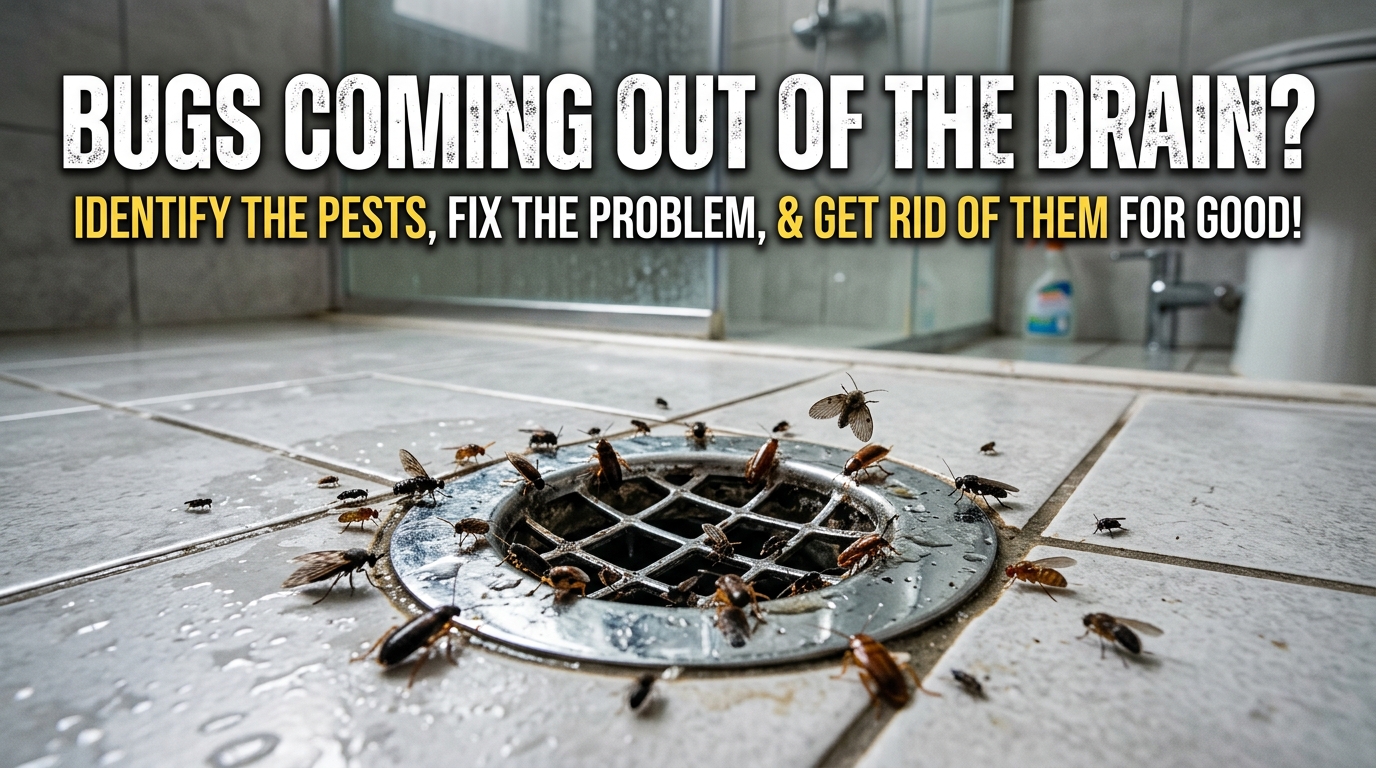
Bugs Coming Out of the Drain?
Seeing bugs crawl out of your sink, shower, or floor drain can be alarming—but in most cases, it’s fixable without calling a plumber. This guide explains why it happens, which bugs they are, and how to stop them permanently. Why Bugs Come Out of Drains Drains provide moisture, warmth, organic material, and darkness—perfect conditions for certain insects to live and breed. The most common causes are: Identify the Bug (This Matters) Different bugs mean different solutions. 1. Drain Flies (Most Common) Cause: Organic slime (biofilm) coating the inside of pipes. 2. Small Black Beetles or Roaches Cause: Sewer access, broken seals, or dried-out traps. 3. Ants Coming from the Drain Cause: Ants use drains as moisture routes when soil is flooded. 4. Worm-Like Larvae Cause: Fly larvae feeding inside pipe sludge. Why It Gets Worse After Rain Heavy rain: If bugs appear only when it rains, your plumbing is likely intact—but under pressure. How to Stop Bugs Coming Out of the Drain (Step-by-Step) Step 1: Clean the Drain Properly (Not Just the Top) Most people clean around the drain—but bugs live inside it. Do this: ⚠️ Avoid pouring bleach alone—it doesn’t remove biofilm. Step 2: Use a Natural Biofilm Killer These break down the food source bugs rely on. Step 3: Check the Drain Trap (Critical) If a drain isn’t used often: Fix: Pour water into unused drains weekly. Step 4: Seal Entry Points Step 5: Stop Moisture Build-Up Dry drains = no bugs. When This Is a Bigger Problem Call a plumber if: This may indicate: Are Bugs Coming Out of Drains Dangerous? In most cases: NoBut they can: Early action prevents infestation. How to Prevent This Long-Term Quick FAQ Why do bugs come out of drains at night?Drains are dark and moist—bugs avoid daylight and come out when it’s quiet. Can bugs crawl up through pipes?Yes. Many insects can climb smooth pipe walls. Does bleach kill drain bugs?It may kill some bugs, but it does not remove the biofilm they feed on. Final Thoughts Bugs coming out of drains is common, especially in warm or wet climates—but it’s also one of the easiest home problems to fix when addressed early. 👉 If you’ve dealt with drain smells or slow drainage before, this is often the missing piece. See more related articles

Water Filter Types Explained
If you start looking into water filters, it doesn’t take long before things get confusing. One person swears by a jug in the fridge. Another insists reverse osmosis is the only safe option. Online stores show systems ranging from a few hundred rand to more than the price of a second-hand car. The truth is simpler than the marketing makes it seem: most households don’t need extreme filtration, but almost everyone benefits from some form of it. This guide breaks down the main water filter types used in South Africa — what they actually do, what they don’t, and who each one makes sense for. Important Clarification of Water Filteration No filter is “best” in isolation. A filter is only good if: With that in mind, let’s go through the main categories, starting with the simplest. 1. Water Filter Jugs (Entry-Level Filtration) What They Are Filter jugs are the familiar plastic jugs that sit in the fridge or on the counter. You pour tap water in, it passes through a cartridge, and collects below. What They Typically Remove What They Don’t Remove Well Pros Cons Best For Filter jugs are often people’s first step away from bottled water. They’re not a complete solution, but they’re better than nothing. 2. Countertop Water Filters What They Are These sit on your counter and usually connect to the tap when in use. They’re more robust than jugs and use larger filter cartridges. What They Typically Remove What They Don’t Remove Pros Cons Best For For many households, this is the point where water starts to feel consistently “better” without major investment. 3. Under-Sink Water Filtration Systems (The Sweet Spot) What They Are Under-sink systems are installed below the kitchen sink and supply filtered water through a dedicated tap. These systems are extremely popular in South Africa for good reason. What They Typically Remove Some higher-end systems also reduce bacteria. What They Don’t Remove (Usually) Pros Cons Best For For most Cape Town households, an under-sink filter is the most practical long-term solution. 4. Reverse Osmosis (RO) Systems What They Are Reverse osmosis systems force water through a semi-permeable membrane, removing a very high percentage of contaminants. What They Remove Downsides People Don’t Talk About Enough Pros Cons Best For RO systems are powerful tools — but they are not automatically the “best” choice. 5. Whole-House Water Filters What They Are Whole-house systems filter water as it enters the home, affecting every tap, shower, and appliance. What They Typically Do What They Don’t Do Well Pros Cons Best For Whole-house filters are comfort upgrades, not drinking-water solutions. How These Water Filter Systems Compare in Real Life Most households don’t use one system alone. They combine: This layered approach costs less than extreme systems and solves real problems without chasing perfection. Filters vs Bottled Water: The Cost Reality Bottled water feels cheap until it isn’t. At R20+ for 5 litres, many families spend hundreds per month without noticing. A mid-range filter system often pays for itself in under a year — and continues saving money after that. What to Look for When Choosing a Filter (Without Getting Technical) Instead of focusing on buzzwords, ask: If a system is so complex that you stop maintaining it, it becomes useless. Common Filter Myths About A Water Filter Marketing thrives on confusion. Clarity saves money. Final Thoughts: Choose the Right Tool, Not the Biggest One Water filtration isn’t about winning an arms race against contaminants. It’s about matching the solution to the problem. For most South African households: A well-chosen filter quietly improves daily life — without becoming another thing to worry about. Continue Reading
The 20 Most Critical Tools Every Homeowner Should Own
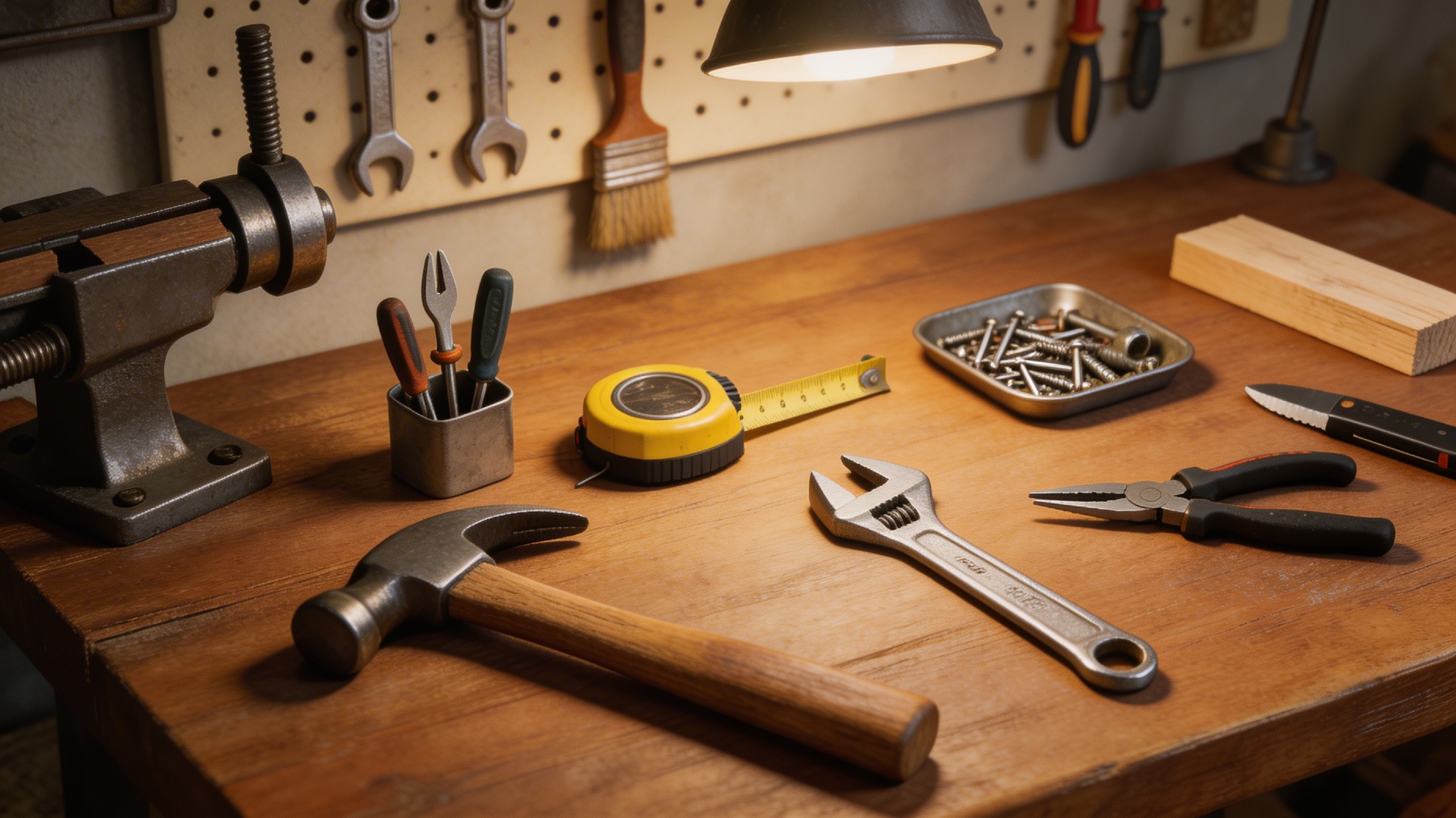
Owning a home is incredibly rewarding… right up until something breaks at 8pm, the hardware stores are closed, and YouTube is buffering. That’s when you truly understand the value of having the right tools already in your house. This article isn’t about fancy workshop gear or tools you’ll use once and forget. It’s about the most critical tools every homeowner should own — the ones that let you build, repair, secure, and survive everyday problems without panic. I’m also keeping this real. Each tool is included with one simple question in mind: Would I be stuck if I didn’t have this after hours? If the answer is yes, it made the list. Tools Every Homeowner Should Own Let’s start with the backbone of any capable home. These tools cover plumbing mishaps, loose fittings, basic construction, emergency fixes, and everyday maintenance. 1. Cordless Drill + Full Attachment Set If you own just one power tool, make it this. A cordless drill with drill bits, screwdriver bits, spade bits, and a countersink attachment can handle shelving, furniture assembly, curtain rails, door repairs, and quick fixes when screws pull loose. When something starts rattling or falling off at night, this tool saves you. 2. Hammer (Claw Hammer, Medium Weight) A hammer solves more problems than people admit. Loose nails, small demolitions, quick framing adjustments, and even emergency leverage situations all rely on a solid claw hammer. When something breaks, a hammer often makes it possible to access the problem in the first place. 3. Adjustable Wrench Pipes don’t ask permission to leak, and taps love to drip after hours. An adjustable wrench lets you tighten fittings, shut off small valves, and remove stubborn nuts without needing the exact size. 4. Screwdriver Set (Flathead + Phillips) Yes, your drill can drive screws, but sometimes you need finesse. A good screwdriver set helps when working with delicate fixtures, electrical plates, appliances, and tight spaces where a drill just doesn’t fit. 5. Tape Measure (At Least 5m / 16ft) You can’t build, buy, or fix accurately without measurements. Whether you’re cutting wood, checking if furniture fits, or aligning wall fixtures, a tape measure prevents costly mistakes — especially when you can’t return things the same night. 6. Spirit Level Crooked shelves, slanted frames, and uneven appliances cause long‑term issues. A spirit level ensures anything you fix or install stays straight and stress‑free. This is one of those tools you don’t realize you need until everything looks off. 7. Utility Knife (With Spare Blades) From opening packaging to trimming carpet, cutting drywall, slicing sealant, or removing old caulk, a utility knife is constantly useful. When something breaks, this tool helps you cleanly remove the damaged part. 8. Pliers (Combination or Linesman Pliers) Pliers grip, twist, pull, bend, and hold when your fingers can’t. They’re essential for minor electrical work, stubborn fasteners, and emergency repairs where things refuse to cooperate. 9. Needle‑Nose Pliers When something falls into a tight space or a wire needs precision handling, needle‑nose pliers are irreplaceable. They shine during late‑night fixes involving appliances, plugs, and small components. 10. Allen Key Set (Metric + Imperial) Modern furniture, door handles, appliances, and fixtures rely heavily on Allen screws. Without this set, you’ll be stuck staring at a loose handle you can’t tighten. 11. Handsaw Power tools fail, batteries die, and sometimes you just need to cut wood now. A sharp handsaw allows emergency trimming, framing fixes, or removing damaged sections without relying on electricity. 12. Stud Finder Hanging anything heavy without knowing where studs are is a gamble. A stud finder prevents ripped drywall and fallen shelves, especially when reinstalling something urgently. 13. Adjustable Pipe Wrench This is different from a regular adjustable wrench. When plumbing issues strike — leaking traps, stuck connectors, or pipe replacements — a pipe wrench gives you the grip you need to stop water damage fast. 14. Caulking Gun Leaks, drafts, and gaps don’t wait for business hours. A caulking gun allows you to seal sinks, tubs, windows, and cracks immediately, preventing water damage and heat loss. 15. Electrical Voltage Tester This small tool can literally save your life. Before touching wires or outlets, a voltage tester confirms whether power is present. When something trips at night, guessing is dangerous. 16. Flashlight or Headlamp Power outages, dark crawl spaces, and late‑night repairs demand proper lighting. A headlamp is especially useful when you need both hands free. 17. Shop Vacuum (Wet/Dry) Flooded laundry? Spilled water heater? Broken pipe? A wet/dry vacuum can remove water quickly and prevent permanent damage while you wait for professional help. 18. Ladder (Sturdy, Multi‑Purpose) Light bulbs blow, smoke alarms chirp, and gutters clog — usually at inconvenient times. A stable ladder keeps you safe while solving these problems immediately. 19. Basic Tool Organizer or Toolbox Having tools doesn’t help if you can’t find them. A proper toolbox keeps everything accessible during emergencies, reducing stress and wasted time. 20. Duct Tape and Cable Ties (Yes, They Count) Temporary fixes matter. Duct tape and cable ties can hold hoses, secure loose parts, manage cables, and buy you time until a permanent repair is possible. 10 Critical Non‑Tool Essentials Every Homeowner Needs Tools fix things, but these items keep your home functional, safe, and livable when things go wrong. First, spare light bulbs. When a bulb blows at night, especially in hallways or bathrooms, you don’t want to be stuck in the dark. Second, batteries in multiple sizes. Remotes, smoke alarms, flashlights, and sensors all rely on them, often failing unexpectedly. Third, a basic first aid kit. Minor injuries happen during repairs, and having supplies nearby prevents small accidents from becoming big ones. Fourth, a fire extinguisher rated for electrical and kitchen fires. Emergencies don’t give warnings, and this single item can prevent disaster. Fifth, plumbing seal tape (PTFE). It’s tiny, cheap, and stops leaks instantly when tightening threaded fittings. Sixth, extension cords and power strips. During repairs or outages, safe power access matters more than convenience. Seventh, spare fuses or circuit breakers. When power trips late at night, replacements keep your home running. Eighth, manual shut‑off knowledge and labels. Knowing
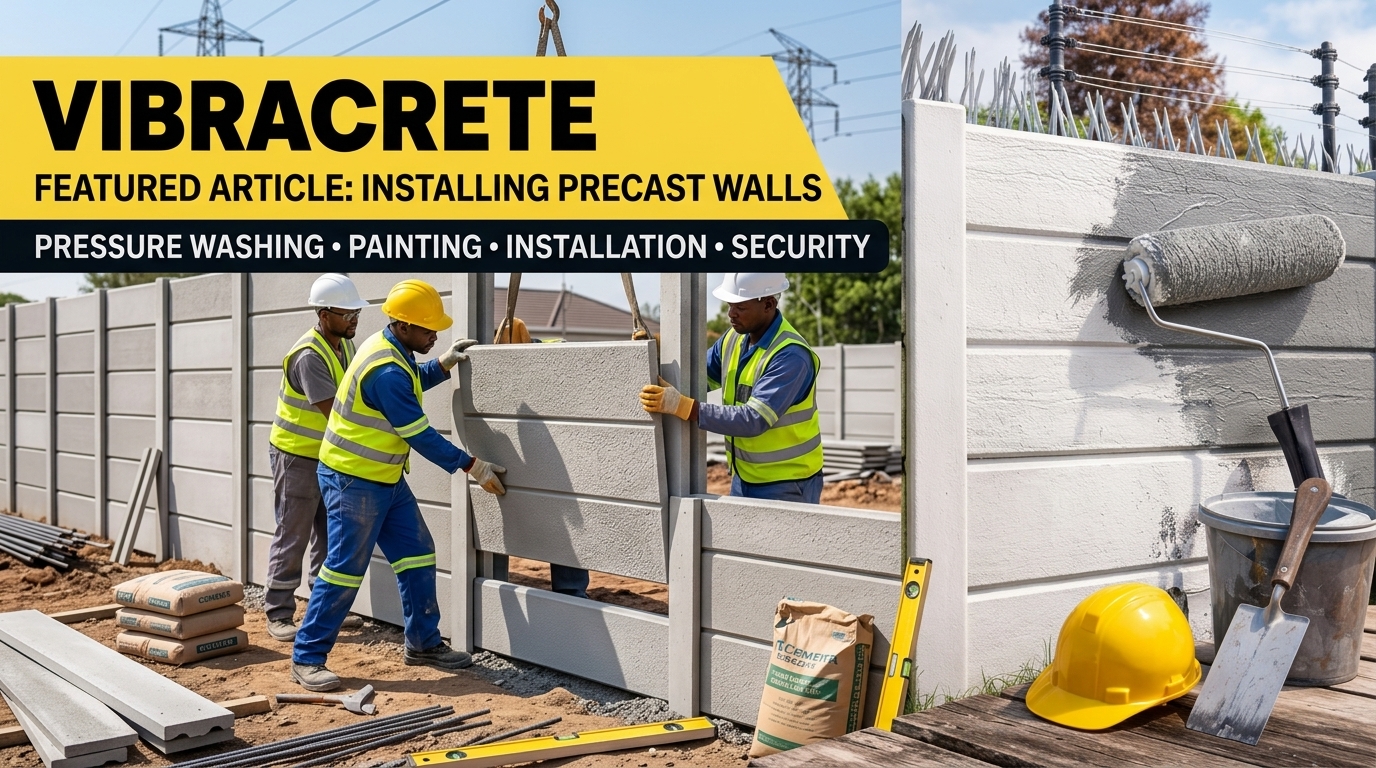
Precast Vibracrete in South Africa: Complete Guide
Vibracrete is everywhere because it solves a very specific South African problem: we need boundaries, we need them fairly quickly, and we need them at a price that doesn’t require a second bond. But while vibracrete is common, good information about it isn’t. Most of what you’ll find online is scattered across forums, WhatsApp groups, or short supplier blurbs that skip the details homeowners actually care about. This article pulls everything together in one place — from buying and cleaning vibracrete, to painting it properly, installing it straight, understanding local regulations, and adding security like spikes or electric fencing. You don’t need to read the whole thing in one go. If you’re just here to figure out painting, you’ll find that section works on its own. Same with installation, pricing, or security. Let’s start at the beginning, because almost every vibracrete project follows the same basic path — whether people realise it or not. What Vibracrete Actually Is (and Why Quality Varies So Much) Vibracrete is precast concrete fencing made in moulds, vibrated to remove air bubbles (hence the name), then cured before being installed into concrete posts. On paper, it sounds straightforward. In practice, not all vibracrete is created equal. Some manufacturers use better cement ratios, better aggregate, and take curing seriously. Others cut corners. From the outside, two slabs might look identical when new, but five years later one is still solid and the other is cracked, chipped, or soft at the edges. Longevity depends on several real-world factors, not marketing claims: In Cape Town’s coastal climate, this matters even more. Salt air, wind, and winter rain will exploit any weakness over time. Vibracrete isn’t fragile by default, but it is unforgiving when installed badly or neglected. Understanding this upfront helps you make better decisions later — especially when choosing between new, second-hand, or patterned slabs. Buying Vibracrete: New vs Second-Hand (and What to Look Out For) For many homeowners, the buying decision comes down to budget first, aesthetics second. That’s understandable, because vibracrete is popular largely because it’s cost-effective. In Cape Town and surrounding areas: Second-hand vibracrete can make sense if: However, you need to inspect slabs carefully. Look for: One or two imperfect slabs aren’t the end of the world, but structural cracks near the post edges can shorten the lifespan dramatically. Pattern vibracrete deserves a special mention. These slabs are often thicker because of additional layers and textures. They come in different designs and sometimes even colours, but in Cape Town they’re relatively rare and attract a premium. Once the cost per slab climbs high enough, many homeowners realise that a traditional brick or block wall starts to make financial sense instead — especially if they’re planning to plaster and paint anyway. Regulations in Cape Town and South Africa: How High Can Vibracrete Be? Before anyone starts digging holes or stacking slabs, it’s worth understanding the legal side. Vibracrete may feel informal because it’s so common, but it still falls under municipal regulations. In Cape Town and most of South Africa: The exact rules can vary slightly by municipality and zoning, but vibracrete is often one of the more flexible boundary options. That’s one reason it’s so popular for upgrades — you can extend an existing wall upwards without demolishing everything. Still, if you’re going significantly higher or adding electric fencing, it’s worth double-checking local by-laws or asking your installer. It’s far easier to confirm upfront than to deal with complaints or forced alterations later. Refer to The City of Cape Town’s website for more info. Installation: Why Straight and Level Matters More Than People Think Installation is where many vibracrete walls fail — not immediately, but slowly, over years. A properly installed vibracrete wall starts with straight, well-aligned posts set into solid concrete footings. If posts are slightly out of level, the slabs will carry uneven load. Over time, this leads to cracking, leaning, or gaps opening between slabs. This matters even more if: Vibracrete is surprisingly strong when forces are distributed evenly. When they’re not, the concrete doesn’t bend — it cracks. This is also why vibracrete costs roughly one-third to one-quarter the cost of a brick wall in labour and materials. It’s quicker to install, requires fewer skills, and uses fewer materials. But that speed advantage disappears if corners are cut. A good installer will: A bad installer will stack slabs quickly and hope for the best. How do I Clean Vibracrete: The Hardest Step (and the Most Skipped) Almost everyone underestimates how difficult vibracrete can be to clean — especially old slabs. Over time, vibracrete collects: For paint to last, the surface must be clean. Unfortunately, vibracrete’s porous texture makes this harder than it looks. In many cases, cleaning requires: Some slabs clean up easily. Others fight back. If paint is applied over dirt, algae, or loose material, it will fail — often within a year or two. This is why painting vibracrete is less about the paint itself and more about preparation. Which brings us to the most misunderstood topic of all. Can I use Roof Paint to Paint Vibracrete? In South Africa, many people use roof paint on vibracrete — and surprisingly, it often works well. Roof paint is: However, roof paint isn’t magic. It only performs well if the surface underneath is properly prepared. For best results: Skipping prep is the main reason painted vibracrete starts peeling or fading unevenly. When done properly, painting can significantly extend the lifespan of vibracrete by sealing the surface and reducing moisture penetration. Painted vibracrete also tends to age more gracefully. Instead of patchy grey and dark stains, it fades more uniformly and is easier to touch up later. Extending Vibracrete Upwards: What Actually Works Long-Term One of vibracrete’s biggest advantages is how easy it is to extend upwards. Existing posts can often accommodate additional slabs, or extensions can be added. That said, height increases load and wind resistance. The taller the wall, the more critical: Extending vibracrete is usually more cost-effective than rebuilding, but only if the original structure is sound. Adding height to