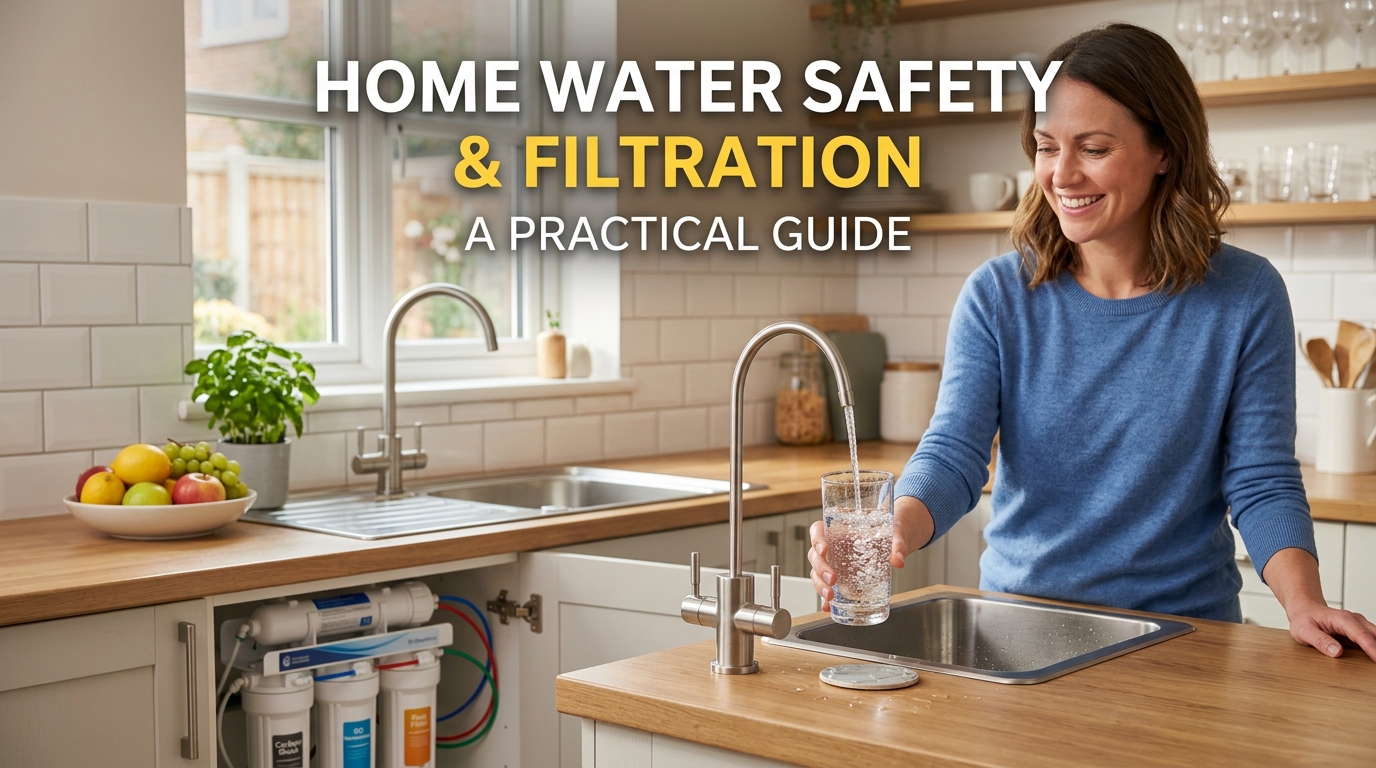
Water is one of those things most of us only think about when something goes wrong. A strange taste. A stomach bug that moves through the family. A notice from the municipality. Or a quiet but uncomfortable realisation that bottled water has become a permanent line item in the monthly budget. If you live in Cape Town, you already know that our water situation is… complicated. Compared to many countries, we’re lucky. Our tap water is treated, monitored, and generally considered safe. At the same time, many households boil water, buy bottled water, install filters, or do all three — often without being fully sure what problem they’re actually trying to solve. This guide exists to clear that up. It’s written for homeowners and families who want to make sensible, cost-effective decisions about water — not perfect ones, not fear-driven ones. Whether you rely on municipal water, borehole water, rainwater tanks, or a mix of everything, the goal is the same: safe water, reasonable costs, and fewer unknowns. You don’t need to read this all at once. Each section stands on its own, and links to deeper guides if you want to go further. Understanding Water Quality in South Africa South Africa’s urban water systems are better than many people realise — and also more fragile than most people admit. Municipal water in cities like Cape Town is treated at large plants, tested regularly, and released into the system according to national standards. On paper, this water is safe to drink. But water quality doesn’t end at the treatment plant. Between the plant and your tap: This is why two neighbours can have very different experiences with the same “water supply.” One drinks from the tap with no issue. The other boils everything after a bad bout of gastro. Neither is necessarily wrong. Is Cape Town Tap Water Safe to Drink? The honest answer is: usually, yes — but not always, and not equally for everyone. Cape Town’s tap water generally meets South African National Standards. However, past studies and municipal notices have shown that: For healthy adults, drinking straight from the tap is unlikely to cause problems most of the time. For children, elderly family members, or anyone with a compromised immune system, the margin for error is smaller. This is why many households are advised to boil water during certain periods, and why boiling twice is sometimes recommended when contamination is suspected. 👉 Watch this video for a deeper dive into what the tap water is really like in Cape Town What Are the Actual Health Risks in Household Water? Short-Term Risks Long-Term or Cumulative Concerns It’s important to separate probability from possibility. Most people will never experience serious illness from tap water. But when something does go wrong, it often affects multiple people in the household at once — which is why families tend to be more cautious than individuals. Drinking Water vs Household Water: A Critical Distinction One of the biggest mistakes people make is treating all water use as equal. You do not need drinking-quality water for: You do want higher-quality water for: Once you separate these uses mentally, everything else becomes easier — and cheaper. Borehole Water: Natural Doesn’t Mean Safe Borehole water is extremely popular in Cape Town, especially where municipal bills climb quickly. Sometimes borehole water is excellent. Other times, it isn’t. Common borehole issues include: The biggest danger with borehole water is assumption. People assume underground water is clean by default. Without testing, that assumption can be wrong. 👉 Deeper dive:Is Borehole Water Safe for my swimming pool? Rainwater & JoJo Tanks: Where They Shine (and Where They Don’t) Rainwater tanks are one of the smartest investments many South African households have made — but only when used correctly. Rainwater is excellent for: Rainwater is not ideal for drinking unless properly treated. Bird droppings, dust, roofing materials, and stagnant storage all introduce risk. Most households get the best value by using rainwater to reduce municipal consumption, not to replace drinking water entirely. 👉 More detail here:Rainwater & JoJo Tanks: What You Can (and Shouldn’t) Use Them For Water Filtration Options: A High-Level Overview There is no single “best” water filter. There is only the best filter for your situation. Broadly, filtration options fall into these categories: Price ranges vary wildly — from under R500 to well over R15,000. More expensive does not always mean more appropriate. 👉 Full comparison:Water Filter Types Explained Showering in Tap Water: Is It as Safe as We Assume? Most people never question shower water — and for most people, that’s fine. However: For people with eczema, asthma, or very sensitive skin, shower water quality can affect comfort more than drinking water quality. Shower filters won’t make unsafe water safe, but they can improve skin, hair, and smell for some users. 👉 Learn more:Is Showering in Tap Water Safe? The Cost of Water: Why Bottled Water Quietly Destroys Budgets At around R22 for 5 litres (as of 2025), bottled water feels cheap — until you do the maths. A family of five can easily spend: That’s a significant percentage of a R20,000 take-home salary, for something that doesn’t build long-term resilience. Not to mention an overwhelming portion of the population work on construction or work as a maid on minimal wage structures. While the data would suggest South Africans earn ‘ enough ‘ to survive, the uncomftable truth that is not officially reported; is that is most households earn a combined salary of under R7000. Then one must factor in morgage, rates, debt repayments, travelling to and from work with a car or taxi. The numbers just don’t add up, meaning most citizens cannot afford bottled water. To make matters worst, there are different levels of QC between manufacturers (there may be 100’s), and often people get sick after consuming bottled water. Think about the millions of infants that require a clean water source for their powder milk. For context as of December 2025:– 5L Juice: R60 (cheaper option)– 2L Coca Cola: R24– 5L Water: R20 – R29 (depends on brand and store sales)– 2L Full Cream