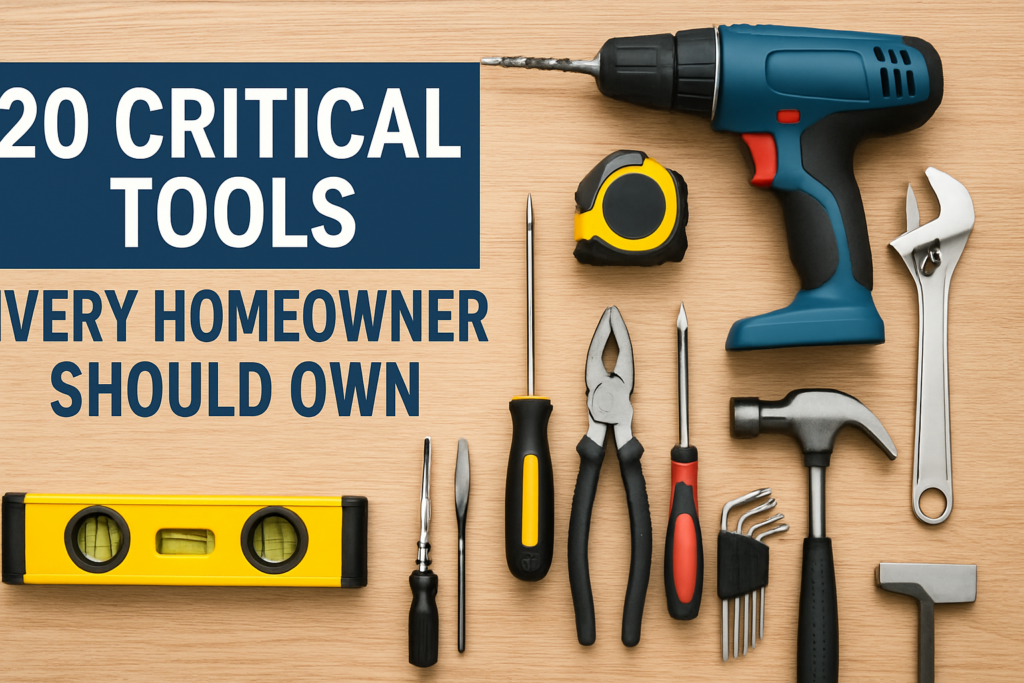
Owning a home is incredibly rewarding… right up until something breaks at 8pm, the hardware stores are closed, and YouTube is buffering. That’s when you truly understand the value of having the right tools already in your house. This article isn’t about fancy workshop gear or tools you’ll use once and forget. It’s about the most critical tools every homeowner should own — the ones that let you build, repair, secure, and survive everyday problems without panic.
I’m also keeping this real. Each tool is included with one simple question in mind: Would I be stuck if I didn’t have this after hours? If the answer is yes, it made the list.
The 20 Most Critical Tools Every Homeowner Should Own
Let’s start with the backbone of any capable home. These tools cover plumbing mishaps, loose fittings, basic construction, emergency fixes, and everyday maintenance.
1. Cordless Drill + Full Attachment Set
If you own just one power tool, make it this. A cordless drill with drill bits, screwdriver bits, spade bits, and a countersink attachment can handle shelving, furniture assembly, curtain rails, door repairs, and quick fixes when screws pull loose. When something starts rattling or falling off at night, this tool saves you.
2. Hammer (Claw Hammer, Medium Weight)
A hammer solves more problems than people admit. Loose nails, small demolitions, quick framing adjustments, and even emergency leverage situations all rely on a solid claw hammer. When something breaks, a hammer often makes it possible to access the problem in the first place.
3. Adjustable Wrench
Pipes don’t ask permission to leak, and taps love to drip after hours. An adjustable wrench lets you tighten fittings, shut off small valves, and remove stubborn nuts without needing the exact size.
4. Screwdriver Set (Flathead + Phillips)
Yes, your drill can drive screws, but sometimes you need finesse. A good screwdriver set helps when working with delicate fixtures, electrical plates, appliances, and tight spaces where a drill just doesn’t fit.
5. Tape Measure (At Least 5m / 16ft)
You can’t build, buy, or fix accurately without measurements. Whether you’re cutting wood, checking if furniture fits, or aligning wall fixtures, a tape measure prevents costly mistakes — especially when you can’t return things the same night.
6. Spirit Level
Crooked shelves, slanted frames, and uneven appliances cause long‑term issues. A spirit level ensures anything you fix or install stays straight and stress‑free. This is one of those tools you don’t realize you need until everything looks off.
7. Utility Knife (With Spare Blades)
From opening packaging to trimming carpet, cutting drywall, slicing sealant, or removing old caulk, a utility knife is constantly useful. When something breaks, this tool helps you cleanly remove the damaged part.
8. Pliers (Combination or Linesman Pliers)
Pliers grip, twist, pull, bend, and hold when your fingers can’t. They’re essential for minor electrical work, stubborn fasteners, and emergency repairs where things refuse to cooperate.
9. Needle‑Nose Pliers
When something falls into a tight space or a wire needs precision handling, needle‑nose pliers are irreplaceable. They shine during late‑night fixes involving appliances, plugs, and small components.
10. Allen Key Set (Metric + Imperial)
Modern furniture, door handles, appliances, and fixtures rely heavily on Allen screws. Without this set, you’ll be stuck staring at a loose handle you can’t tighten.
11. Handsaw
Power tools fail, batteries die, and sometimes you just need to cut wood now. A sharp handsaw allows emergency trimming, framing fixes, or removing damaged sections without relying on electricity.
12. Stud Finder
Hanging anything heavy without knowing where studs are is a gamble. A stud finder prevents ripped drywall and fallen shelves, especially when reinstalling something urgently.
13. Adjustable Pipe Wrench
This is different from a regular adjustable wrench. When plumbing issues strike — leaking traps, stuck connectors, or pipe replacements — a pipe wrench gives you the grip you need to stop water damage fast.
14. Caulking Gun
Leaks, drafts, and gaps don’t wait for business hours. A caulking gun allows you to seal sinks, tubs, windows, and cracks immediately, preventing water damage and heat loss.
15. Electrical Voltage Tester
This small tool can literally save your life. Before touching wires or outlets, a voltage tester confirms whether power is present. When something trips at night, guessing is dangerous.
16. Flashlight or Headlamp
Power outages, dark crawl spaces, and late‑night repairs demand proper lighting. A headlamp is especially useful when you need both hands free.
17. Shop Vacuum (Wet/Dry)
Flooded laundry? Spilled water heater? Broken pipe? A wet/dry vacuum can remove water quickly and prevent permanent damage while you wait for professional help.
18. Ladder (Sturdy, Multi‑Purpose)
Light bulbs blow, smoke alarms chirp, and gutters clog — usually at inconvenient times. A stable ladder keeps you safe while solving these problems immediately.
19. Basic Tool Organizer or Toolbox
Having tools doesn’t help if you can’t find them. A proper toolbox keeps everything accessible during emergencies, reducing stress and wasted time.
20. Duct Tape and Cable Ties (Yes, They Count)
Temporary fixes matter. Duct tape and cable ties can hold hoses, secure loose parts, manage cables, and buy you time until a permanent repair is possible.
10 Critical Non‑Tool Essentials Every Homeowner Needs
Tools fix things, but these items keep your home functional, safe, and livable when things go wrong.
First, spare light bulbs. When a bulb blows at night, especially in hallways or bathrooms, you don’t want to be stuck in the dark.
Second, batteries in multiple sizes. Remotes, smoke alarms, flashlights, and sensors all rely on them, often failing unexpectedly.
Third, a basic first aid kit. Minor injuries happen during repairs, and having supplies nearby prevents small accidents from becoming big ones.
Fourth, a fire extinguisher rated for electrical and kitchen fires. Emergencies don’t give warnings, and this single item can prevent disaster.
Fifth, plumbing seal tape (PTFE). It’s tiny, cheap, and stops leaks instantly when tightening threaded fittings.
Sixth, extension cords and power strips. During repairs or outages, safe power access matters more than convenience.
Seventh, spare fuses or circuit breakers. When power trips late at night, replacements keep your home running.
Eighth, manual shut‑off knowledge and labels. Knowing where your water, gas, and power shut‑offs are — clearly marked — is critical.
Ninth, emergency contact list. Plumbers, electricians, neighbors, and family numbers should be accessible even if your phone dies.
Tenth, a printed home manual or notes. Appliance models, warranty info, and repair notes save time and frustration when troubleshooting under pressure.
Final Thoughts
The truth is, you don’t need to be a professional handyman to handle most household problems — you just need the right tools ready when it counts. The most critical tools every homeowner should own aren’t about ambition; they’re about preparedness. When shops are closed, weather is bad, or help is unavailable, these tools turn panic into progress.
Start with the basics, build over time, and treat your home like the long‑term investment it is. Future‑you will be very grateful the next time something breaks after hours.
If you’re serious about home ownership, maintenance, and saving money, this setup isn’t optional — it’s essential.
